 ZLINE
ZLINEFirmware Engineering
Embedded Software Design
HMI, communication, and motor control software for medical devices — the firmware layer that turns hardware into a product.
Three Software Layers, One Coherent Device
Medical device software spans three distinct disciplines: the interface the clinician touches, the communication that ties the system together, and the motor control that does the physical work. Zlinemed’s software design service covers all three — the same firmware stack that runs our ZL-HSDRILL controller and simulation pump systems.
HMI Design (Human-Machine Interface)
The HMI layer handles user interface and interaction: screen layout, buttons and sliders, status indicators, feedback, and error alerts. Development uses tools such as Qt, touchscreen drivers, and graphics libraries — producing interfaces that stay readable and responsive in clinical conditions, with customizable UI for OEM branding.
Communication Design
The communication layer handles data exchange between devices, covering protocols including UART, CAN, RS485, EtherCAT, and Modbus. Engineering focus falls on the three properties medical systems cannot compromise: data integrity, real-time performance, and error handling. This is the layer that lets a handpiece, a controller, a foot pedal, and a robotic host behave as one system.
Motor Control Design
The motor control layer handles motor algorithms and control logic: field-oriented control (sensorless and sensored), speed, position, and torque control, high-frequency injection, and PWM generation. Implementation covers closed-loop control, filtering, and protection — the logic that keeps a 120,000 RPM surgical drill stable and controlled.
Software Built With the Hardware
Firmware developed in isolation fights its own hardware. At Zlinemed, software design runs alongside circuit design, so drivers, protections, and control loops are written and tested against the real board from day one. For complete device programs, see medical device development.
Frequently Asked Questions
Which UI technologies do you use for medical HMIs?
HMI development uses tools such as Qt, touchscreen drivers, and graphics libraries, covering screen layout, buttons and sliders, status indicators, feedback, and error alerts.
Which communication protocols do you support?
UART, CAN, RS485, EtherCAT, and Modbus, with engineering focus on data integrity, real-time performance, and error handling.
What motor control algorithms do you implement?
Field-oriented control (sensorless and sensored), speed, position, and torque control, high-frequency injection, and PWM — with closed-loop control, filtering, and protection logic.
Applications
Plan your firmware stack
Describe your target hardware, communication protocols, and UI requirements. We will propose a firmware architecture and a development plan.
Discuss Your ProjectRelated Products & Services
Circuit & PCBA Design
Schematics, multi-layer PCB layout, and EMC-aware electronics for medical systems.
Explore service →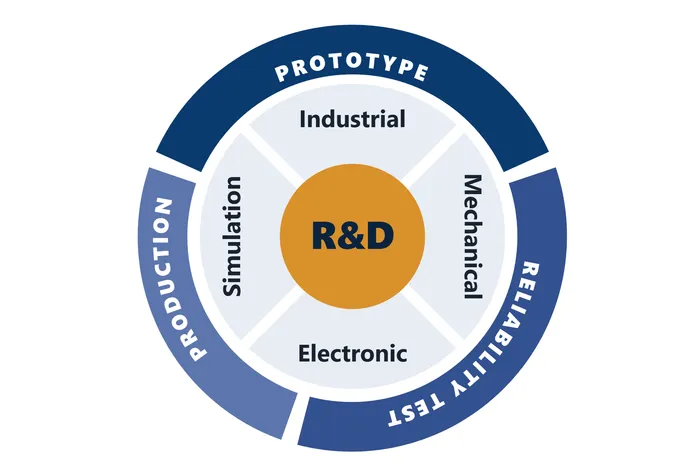
Medical Device Development and Engineering Services
Pair firmware development with electronics, mechanical design, and prototyping under one program.
Explore service →
Robotic Oscillating Saw ZL-RobotSaw
Robot-mounted oscillating saw with EtherCAT connectivity, IP68 sealing, and a design for high-temperature steam sterilization.
View product →