 ZLINE
ZLINE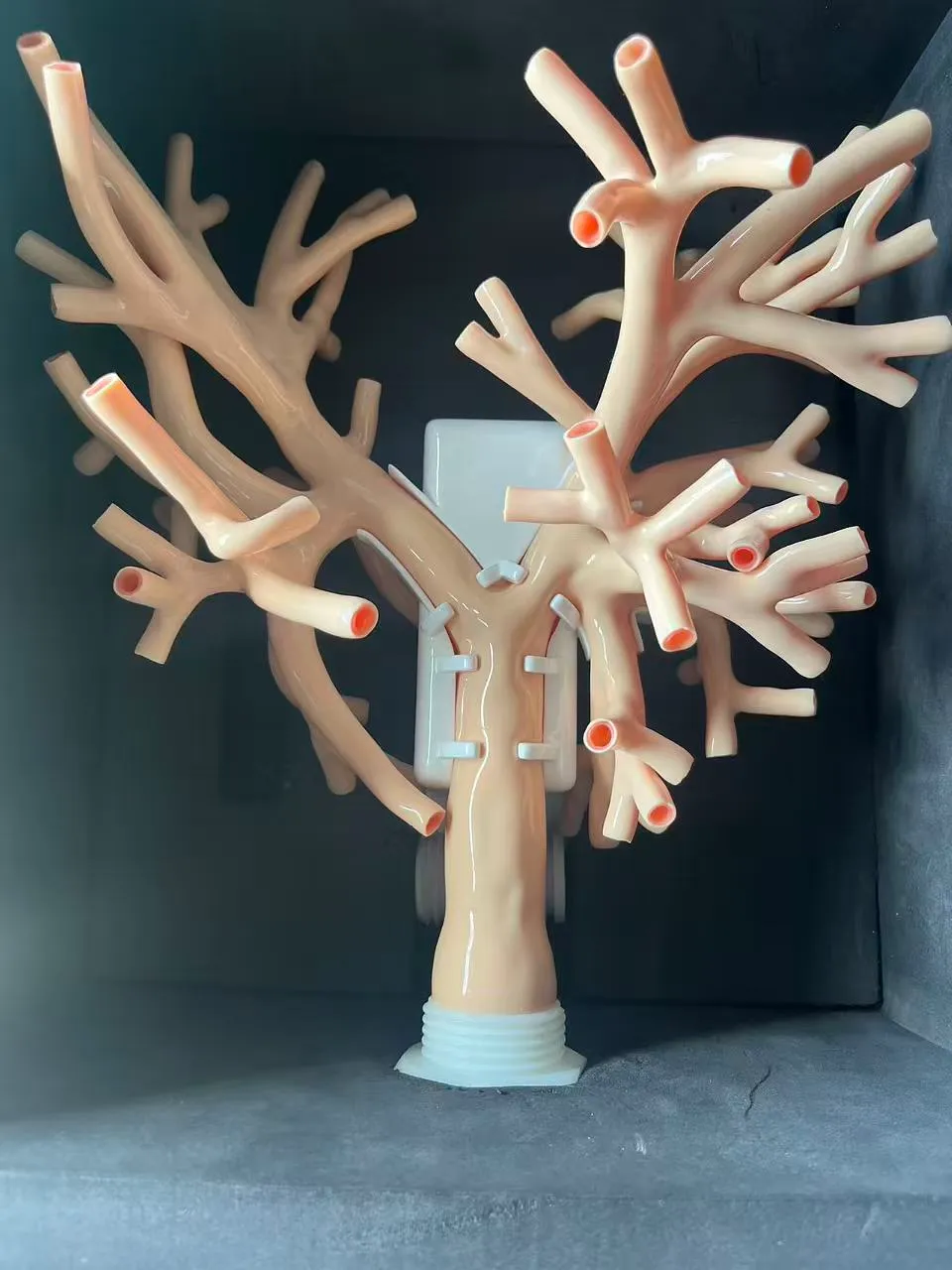
Medical Simulation
Medical Simulation Technology
Anatomically accurate simulation devices — vascular models, organ models, and the pump systems that bring them to life — built from clinical CT imaging data.
Simulation That Behaves Like the Patient
High-fidelity medical simulation needs two things: anatomy that is dimensionally true, and physiology that moves. Zlinemed’s simulation technology platform delivers both — silicone anatomical models reconstructed from clinical CT imaging data, driven by programmable pump systems that reproduce pulsatile circulation and physiological breathing.
Medical device companies use these platforms to test and demonstrate products under repeatable, lifelike conditions. Hospitals and training institutions use them to build endoscopic, endovascular, and image-guided procedure skills before trainees reach the patient.
Core Technologies
CT-Data-Driven Anatomical Modeling
Every anatomy — from a fifth-generation bronchial tree to a full-body arterial system — is reconstructed from clinical imaging data, preserving true inner lumen dimensions in millimeters. Custom anatomical models can be developed from customer-provided CT data, specifications, or physical samples.
Transparent Silicone Material Technology
Our independently developed transparent silicone mimics the elasticity and flexibility of human vessels and tissue while providing high transparency, so instruments remain fully visible throughout a simulated procedure.
Physiological Drive Systems
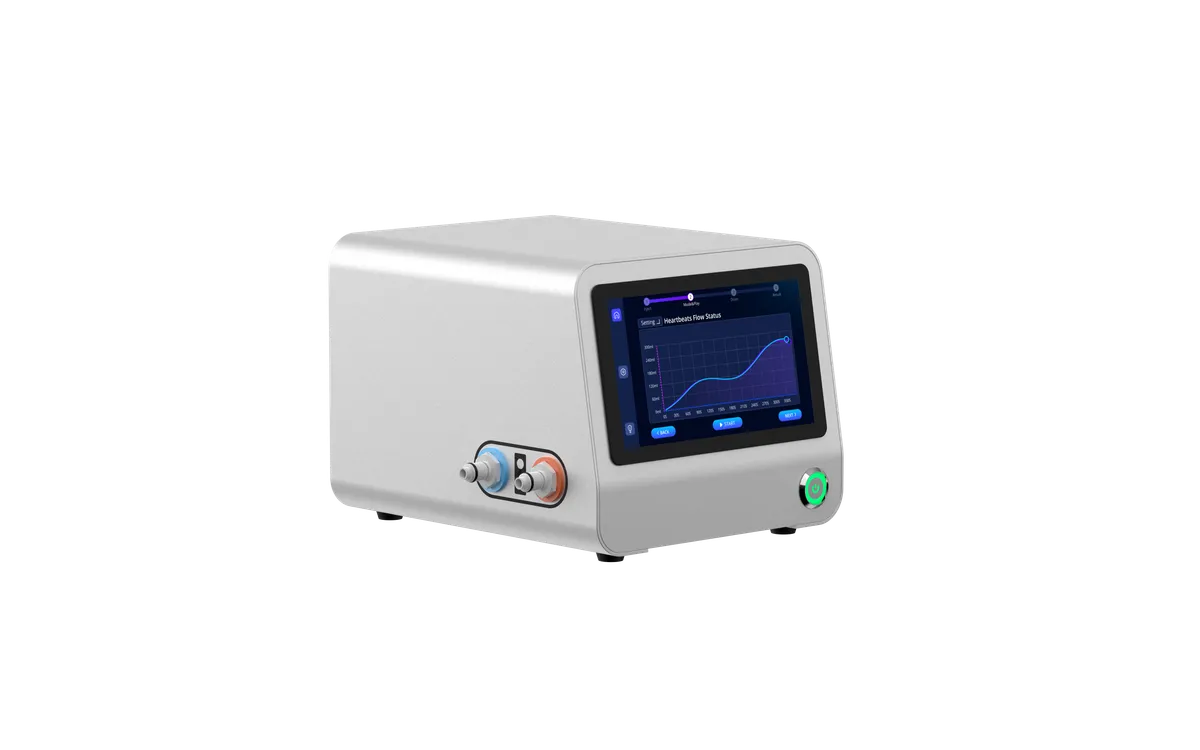
Programmable pumps supply the physiology: the cardiac pulsatile pump CS-S001 generates adjustable pulsatile flow (20-220 beats/min, up to 2000 mL/min), and the simulated respiration pump RT-BR001 drives realistic organ motion with configurable rate, tidal volume, and waveforms.
Product Families
- Silicone vascular models — full-body systems, aortic and cerebral anatomies, and plate-type mock vessels for device testing and endovascular training.
- Endoscopic training models — urology models (US-M001, US-P001) and airway/thoracic models (RT-L001, RT-BR001) for procedural skills training.
- Simulation pump systems — cardiac pulsatile and respiratory drive units that turn static anatomy into dynamic simulation.
From Catalog Models to Custom Platforms
Standard models ship as documented, repeatable training platforms. When your protocol needs something specific — a particular lesion geometry, a stricture level, an anatomy matched to your imaging data — our engineering team builds it from your CT data or specifications. For complete training-lab configurations, see medical simulation systems for surgical training, or contact us to discuss requirements.
Frequently Asked Questions
What makes Zlinemed simulation models anatomically accurate?
Models are reconstructed from clinical CT imaging data, so vessel lumens, bronchial trees, and organ geometry reflect true anatomical dimensions rather than idealized shapes.
Can simulation devices be combined into complete systems?
Yes. Vascular models pair with the cardiac pulsatile pump for beating circulation, and organ models pair with the respiration pump for breathing motion — forming complete, controllable simulation platforms.
Do you build custom simulation models?
Yes. Custom anatomies, pathologies, and specifications can be produced from customer parameters, CT data, or physical samples.
Applications
Plan your simulation platform
Share your target anatomy, procedure, device-testing protocol, or CT data. We can recommend a standard simulation model or develop a customized platform.
Send Your RequirementsRelated Products & Services
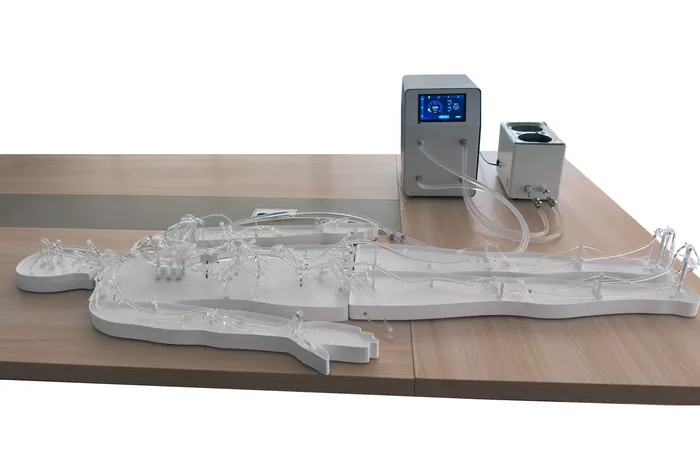
Silicone Vascular Models & Mock Vessels
Transparent silicone vessels, from standardized test plates to full-body anatomies with pulsatile flow.
Explore service →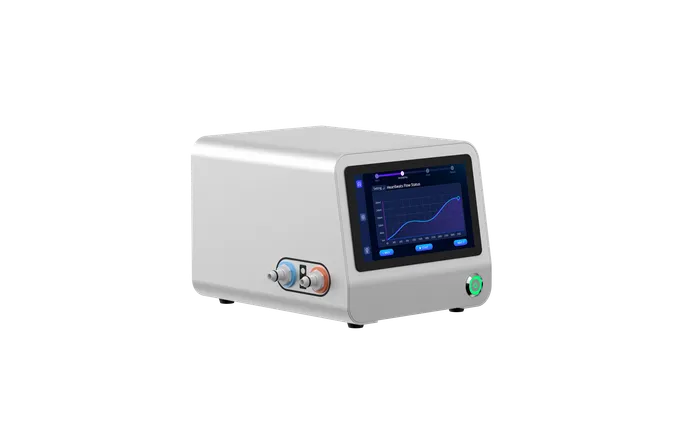
Cardiac Pulsatile Pump CS-S001
Benchtop pulsatile flow source, 20-220 beats/min and up to 2000 mL/min, with fluid temperature control.
View product →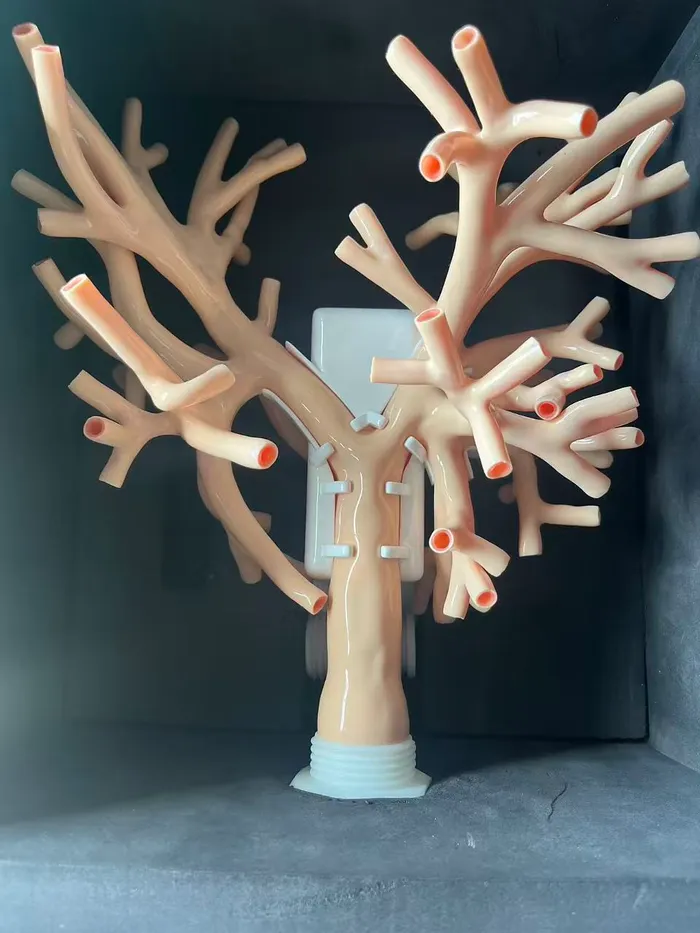
Endoscopic Training Models for Urology and Airway Simulation
Urology, airway, and thoracic models for hands-on endoscopic skills practice with real instruments.
Explore service →
Medical Device Development and Engineering Services
From anatomical modeling and CT data processing to simulation platform integration, we support customized platforms for training and device evaluation.
Explore service →