 ZLINE
ZLINE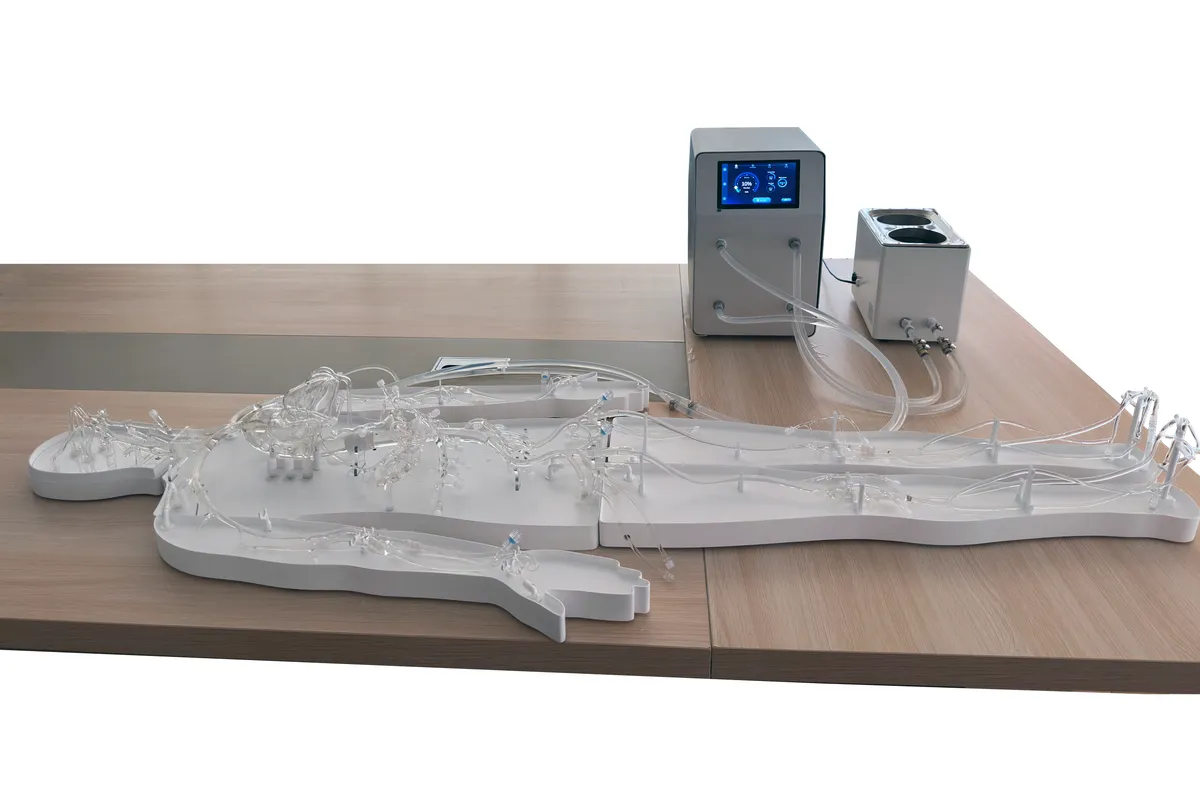

Silicone Vascular Models
Silicone Vascular Models & Mock Vessels
High-fidelity transparent silicone vascular models for interventional device development, endovascular training, and anatomical simulation.
What Are Silicone Mock Vessels?
Silicone mock vessels are physical replicas of human blood vessels used in place of real anatomy for endovascular device testing, catheter-based procedure training, and cardiovascular research. Made from transparent, highly elastic silicone, they reproduce the inner diameters, branching structures, and mechanical feel of physiological vessels — while letting engineers and clinicians watch every movement of a guidewire, catheter, or stent inside the lumen.
Zlinemed develops and manufactures silicone vascular models ranging from single test vessels to complete full-body anatomical simulations, all based on clinical imaging data so that lumen dimensions conform to physiological proportions.
Our Silicone Vascular Model Range
Full-Body Vascular Model + Pulsatile Pump System
This integrated system combines a full-body vascular silicone model with the CS-S001 pulsatile pump, creating an in vitro cardiovascular platform with pulsatile flow that mimics the human circulation. Device developers and physician training programs get a stable, repeatable, and visually intuitive environment.
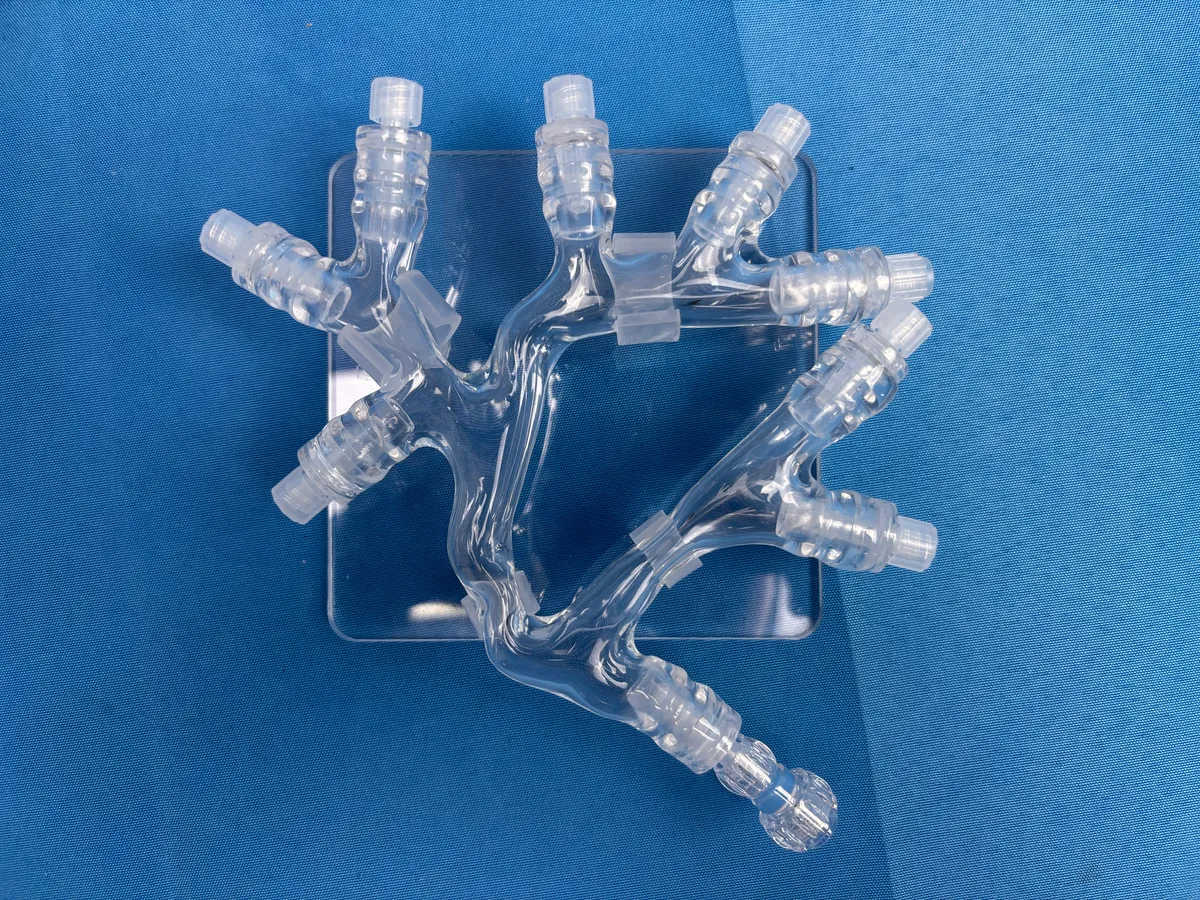
Cerebral Artery Intervention Simulation Model
The Carotid & Cerebral Arterial Intervention Simulation Model ICA001 replicates the anatomical structure of the extracranial and intracranial arterial system, reconstructed from clinical imaging data for neuro-interventional training and device evaluation.
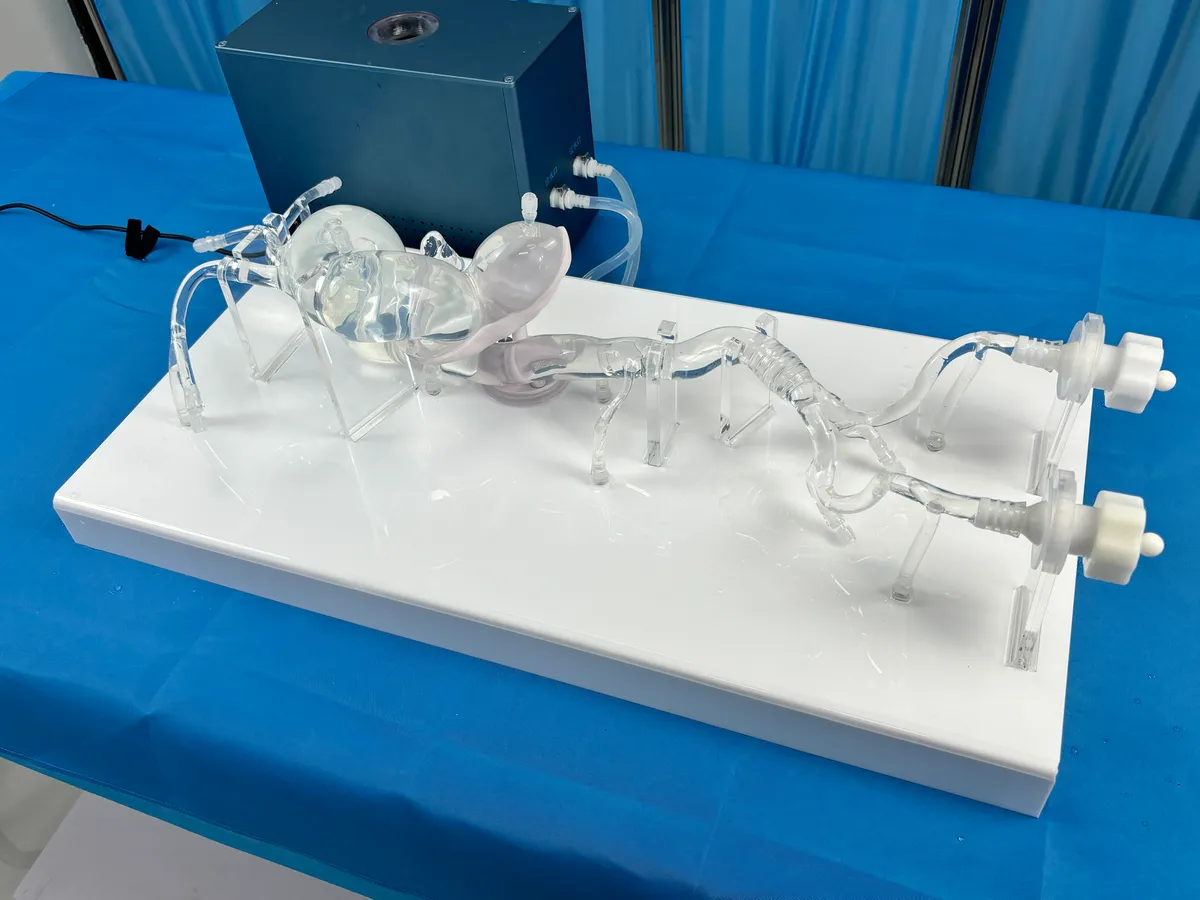
Aortic Intervention Simulation Model TAO001
The Aortic Arch Aneurysm Intervention Simulation Model accurately replicates the human aortic arch, its major arterial branches, and a clinically realistic aortic arch aneurysm — a complete platform for practicing catheter navigation and stent graft deployment.
Plate-Type Mock Vessels
For standardized bench testing, we produce plate-mounted straight and curved vessels in transparent, highly elastic silicone, with inner diameters and branching structures matched to physiological proportions. We can also customize international standard flat vessels such as F2394-X2.4 and F2394-X2.2 for device tracking and deliverability testing.
Applications
- Medical device R&D and evaluation — repeatable anatomical test beds for catheters, guidewires, stents, and delivery systems.
- Endovascular procedure training — realistic practice of navigation, crossing, and deployment under direct visual observation.
- Anatomical simulation for research — venous and arterial simulations with lifelike elasticity and geometry for flow and interaction studies.
- Sales demonstration and education — transparent vessels make device behavior visible to audiences in real time.
Customization From CT Data
Every anatomy is different — and so is every test protocol. Zlinemed builds custom silicone vascular models from customer specification parameters, CT imaging data, or physical samples: specific vessel diameters, lengths, tortuosity, lesion geometries, or complete custom anatomies developed from customer-provided imaging data. Talk to our engineering team about your requirements through the contact page.
Frequently Asked Questions
Why is transparent silicone used as the vascular material?
Our independently developed transparent silicone has physical properties similar to human blood vessels — its elasticity and flexibility closely mimic vascular mechanics — and its high transparency allows clear observation of instruments inside the vessels during simulated procedures.
What documentation is available for the silicone material?
Material specifications and compatibility documentation can be provided based on the selected model and application requirements. Tell us your intended use when requesting a quote.
Can specifications such as diameter, length, and shape be customized?
Yes. We offer customization for training, simulation, and device-testing requirements. Clients can provide specification parameters, CT imaging data, or physical samples as the basis for a custom vascular model.
How should silicone vascular models be stored?
Silicone models may age, yellow, or crack when exposed to light, heat, or oxidative environments over long periods. Store them away from high temperatures, strong light, and oxidative environments to extend service life.
Applications
Specify your mock vessels
Tell us the vessel diameters, tortuosity, or lesion geometry your protocol needs — or send CT data. We will quote a standard model or a custom build with lead time.
Send Your RequirementsRelated Products & Services
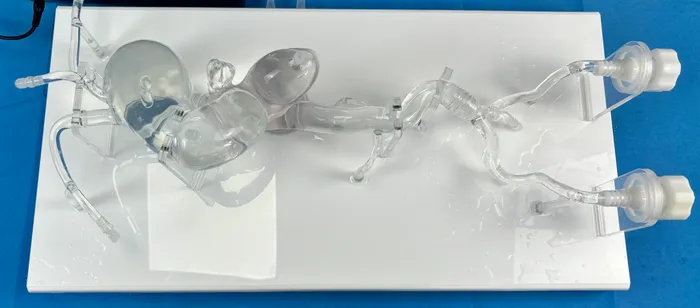
Endovascular Training Simulator: Aortic Intervention Model TAO001
Aortic arch aneurysm model covering the full access pathway from the iliac arteries to the arch branches.
View product →
Cerebral Artery Intervention Simulation Model ICA001
Carotid-to-intracranial arterial anatomy for practicing neuro-interventional navigation under direct vision.
View product →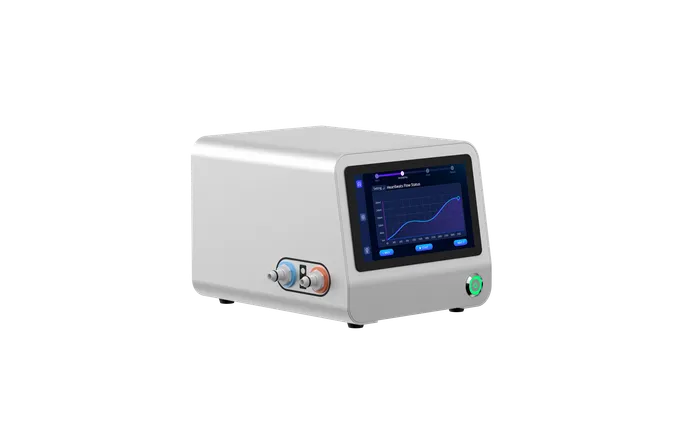
Cardiac Pulsatile Pump CS-S001
Benchtop pulsatile flow source, 20-220 beats/min and up to 2000 mL/min, with fluid temperature control.
View product →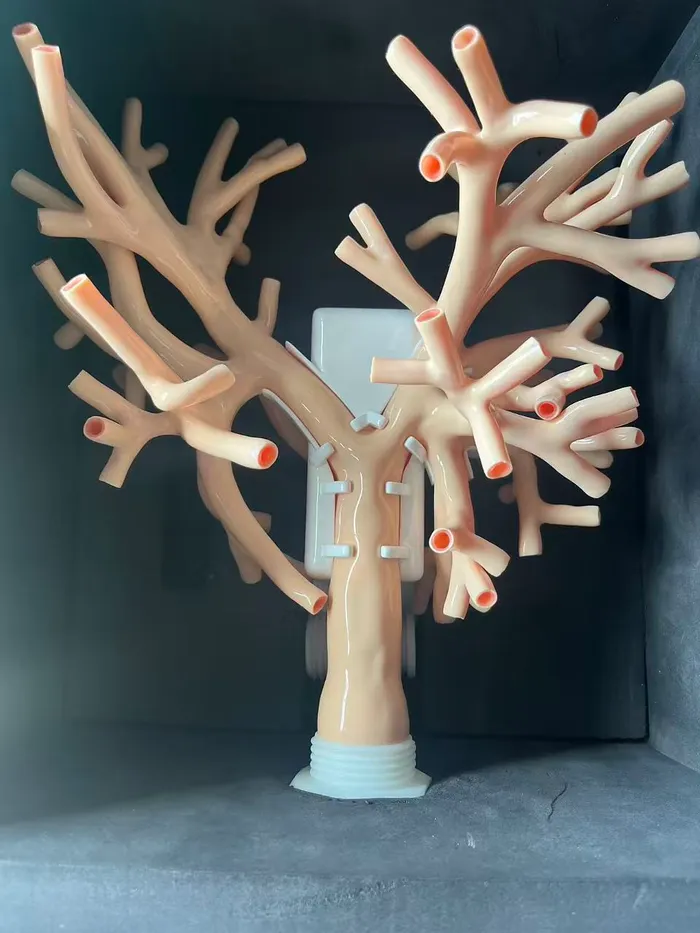
Medical Simulation Technology
Custom anatomical models can be developed for catheter, guidewire, and device evaluation workflows.
Explore service →