 ZLINE
ZLINEMechanical Engineering
Mechanical Design for Medical Devices
From mechanical architecture to production drawings — precision engineering for surgical instruments and simulation systems.
Engineering the Mechanism Behind the Device
Powered surgical tools live or die by their mechanics: a drill that runs at 120,000 RPM, a saw that holds millimeter accuracy on a robot arm. Zlinemed’s mechanical design service brings that level of engineering to client devices — the same discipline that produced our own surgical power tool platforms.
What the Service Covers
Mechanical Principle Architecture Development
System-level functional decomposition and mechanical concept definition based on product requirements — deciding how the device works before deciding how it looks inside.
Transmission System Design
Design of gear trains, linkages, cam systems, precision shafts, and high-speed drive mechanisms tailored to performance targets.
Engineering Simulation & Verification
Structural strength, deformation, fatigue life, and dynamic response analysis using FEA and related validation tools — failure modes found in simulation, not in the field.
3D Mechanical Design
Parametric modeling, tolerance stack-up design, and assembly architecture optimization, producing models that manufacturing can trust.
2D Engineering Drawings
Complete production drawings with GD&T, tolerance control, and manufacturing standards — unambiguous instructions for any qualified supplier.
Functional Prototype Development
Rapid prototyping and functional sample validation for performance, durability, and manufacturability assessment.
Part of an Integrated Development Chain
Mechanical design works hand-in-hand with industrial design upstream and circuit design downstream, under one roof. For full product programs, see medical device development.
Frequently Asked Questions
What kinds of mechanisms do you design?
Gear trains, linkages, cam systems, precision shafts, and high-speed drive mechanisms — the transmission systems at the heart of powered surgical tools — tailored to specific performance targets.
How are designs verified before prototyping?
Through engineering simulation: structural strength, deformation, fatigue life, and dynamic response analysis using FEA and related validation tools, followed by functional prototype testing.
What documentation do you deliver for production?
Complete 2D production drawings with GD&T, tolerance control, and manufacturing standards, plus parametric 3D models with tolerance stack-up design and optimized assembly architecture.
Applications
Talk through your mechanism
Describe the mechanism, its performance targets, or the problem your current design has. We will assess feasibility and propose an engineering plan.
Talk to an EngineerRelated Products & Services
Circuit & PCBA Design
Schematics, multi-layer PCB layout, and EMC-aware electronics for medical systems.
Explore service →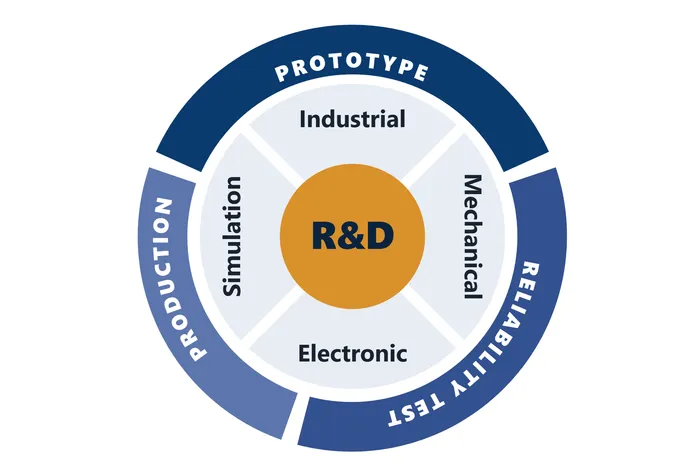
Medical Device Development and Engineering Services
Combine mechanical work with electronics, firmware, and industrial design in a single development program.
Explore service →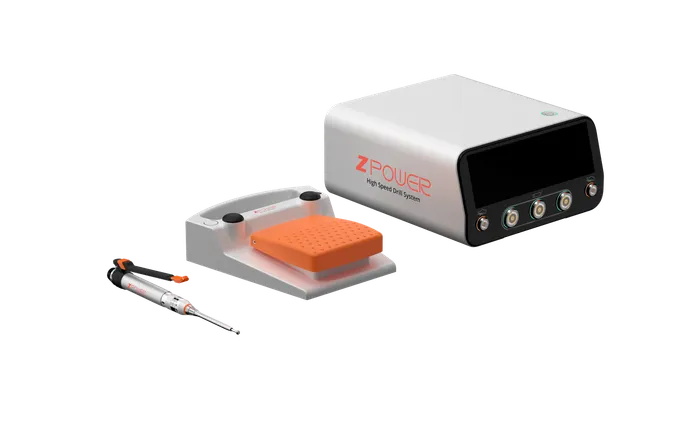
Powered Surgical Tools
Drill and bone saw platforms with the motor control systems that drive them, from handpiece to host interface.
Explore service →